
The idea was to do a minor upgrade to the two main pcs in the house. I just wanted to bump up the graphics a little bit. My graphics card is an antiquated (by enthusiast standards) radeon hd 5570, while my wife is sporting the also antiquated (by enthusiast standards) geforce 220. I say antiquated (by enthusiast standards) because they are plenty for what we are doing now, but they won’t be able to play new games at max frame rate, and my computers are the one area of life that I like to indulge (on a budget).
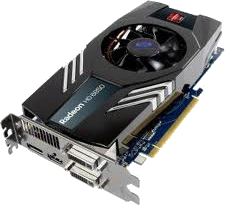
So I set about to choosing a video card. I turned to Tom’s Hardware’s best video cards for the money to help me pick them out. If you are at all geeky about computers and you don’t know about that site, you certainly should check it out. Nearly any time I am trying to find information on a specific pc component, I am able to find it there. The site doesn’t just have a dude throwing out anecdotal evidence for why he thinks one brand is better than the other; there are pages and pages of benchmarks and extensive testing. The testing even breaks it down by what component is better suited for what task. To use a for instance, in the January edition of best processor for the moneyit breaks down the current hundred dollar processors and mentions that the AMD is better suited for multi-tasking, while the Intel counterpart may pull ahead in single application speed. That is exactly why I go there for the majority of my research. So in the aforementioned best graphics card for the money article, I found the Radeon graphics card they recommended in the ~150 dollar price range to be just what I was looking for; I play my games in 1920×1080 or 1920×1200 depending on the game, while the wife plays them at a lower resolution because she likes the interface to be bigger (she is a clicker, not a hotkey-er). This card should be able to run any game in those resolutions without having to lower settings. I was able to pick up a pair of the Sapphire Radeon 6850 cards for 149.99 a piece.
And that is how it all started.
I set about to scrolling through my email for the invoices for all the crap in our current pcs (I never delete any email. I have copied all incoming and outgoing email from pc to pc ((minus obvious junk mail)) for quite literally more than a decade) to see what I put into the power supplies at the time of purchase. You see, the video cards that are currently in our pcs are in there mostly because I was trying to get the best cards I could find without having to run separate power -that is, they are powered by the PCI-e slot alone.
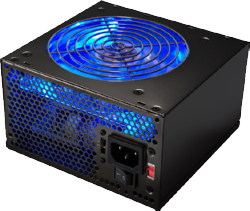
It turns out that I (just like all pc manufacturers nowadays) had totally skimped on the power supplies on our current machines. In both cases they have listed the “surge” power on the PC stats, so realistically they are running at about half the listed power (and how can they get by with that? They don’t do that with a power supply when you buy it, why is it different when it comes already in a case?) While my wife’s rig does have a 600w power supply, that is a no-name, 600w “surge” unit that does not have a 6-pin power connector for the PCI-e. My machine only has a 500w “surge” unit, but it does have a 6-pin connector… which really doesn’t make sense, because at the maybe 250 watts it puts out continuously it won’t be able to realistically push a discrete video card in the first place unless I, you know, remove the cpu. At any rate, when I ordered the video cards, I went ahead and ordered a power supply unit as well. I ordered a Rosewill Rosewill RP600V2-S-SL 600w power supply for $59.99. I did this based on favorable results I have had with Rosewill power supplies in the past, as well as the ratings the power supply has on NewEgg. A lot of enthusiasts throw around the “you don’t want to run a cheap power supply like that because it will fry your whole system” phrase. But, what? In the 501-600 watt category on NewEgg, this particular unit has 73% five star ratings, which is better than the OCZ Fatal1ty and ModXstream, better than the Antec TruePower, better than the SeaSonic Bronze, better than the Corsair Gaming series. In fact the only supply you can find with a better % of 5 star ratings is the Antec BP 550 and then a few that have under 35 reviews, while this one has over 600. So I can’t figure out what they are basing this on. That is actually the reason I am writing this, but I will get to that later.
When the cards arrived, I threw them right into the pc’s. More or less as expected, my machine would fire up and run with it, but when I attempted to actually use the card to play a game the system would simply shut off. The wife’s machine could run it, but barely. It soon became evident that I would need to get a new power supply for her machine as well. So I ordered another of the Rosewill ones pictured above to replace the cheap-ass, flimsy crap that came with the system.
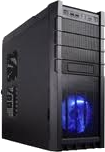
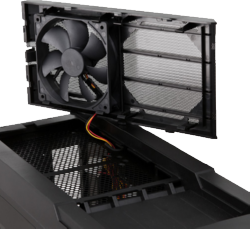 Here is the part where I curse NewEgg (where I buy all my parts). When I went online to order her power supply, they had the exact case I had been planning to buy for my next pc build on sale with their shell shocker deal for … $39.99. When I say it was the exact case I had been wanting, I don’t mean that I was looking at this case and a few others too, I mean I had done some research on cases, I narrowed my decision down to a few different ones, then I watched the NewEgg review of it on YouTubeand decided it was definitely the case I wanted. The major selling points for me were: 1)A single USB 3.0 on the front panel; I recently got an external hard drive that uses USB 3.0, and I currently have it running through a 2.0 on my machine. I am storing all my programming crap on the external drive so I don’t have to copy it to a thumb drive anytime I want to use it on a different machine. Having the USB 3.0 on the front panel will make that so much easier. 2) The case has one front, two top, two side, and one rear fan position. I intend to use them all -more air is always better. 3)There are slide-out, washable filters on the PSU intake and front fan intake. I have several dogs that like to strategically place their hair all over the case fans on my PC’s, hopefully this will alleviate some of that. This leads us nicely into 4) The thing that sets this case apart from all others I had been looking at is what you see to the right here: The top fans can be lifted out for cleaning. My current rig has 2 top fans, but to clean them I have to disconnect all the cables and take the pc out, otherwise I have to blow the dust down on top of the MOBO and other components. With this I should be able to quickly snap them out, hit them with compressed air and be right back in business. In theory.
At this point, I had already purchased three out of 8 of the components necessary to build two new ground up pcs, so I started shopping that idea to see if I could come up with a build that was 1) forward compatible. 2) A reasonable upgrade over our existing systems. 3) Cheap. And while I didn’t know it at the time, 4) Just to piss off some smug, know-it-all enthusiasts. Here is the final build -in image form, as the cart came through in email with base64 encryption, which didn’t transfer to the web page. I also made it into a public wish list, which looks like it will stay active for about six months, after which that link will be broken and I will be directly responsible for slopp(ier that usual)y writing.
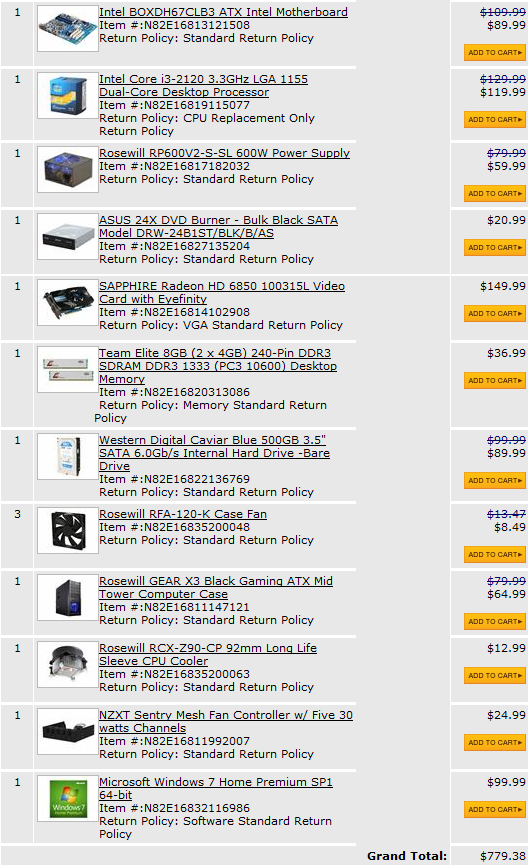
I’m no computer expert and I don’t pretend to be. I would have been happy to hide in a dark corner somewhere to build this budget box and never tell anyone what components went into it… Had it not been for the wild, unsubstantiated facts that were being spewed to me when I asked for a compatibility check in a popular pc building forum. First up was this one:
…It’s a low quality power supply that could potentially fry other computer components. The Seasonic 520W would output more in reality and definitely safer. Alternatives are the Atnec Earthwatts Green 500W (no power cords included) .
This scared the beejeezeus out of me. Could my choice of this piece of shit power supply cause my entire pc to catch fire, rape my wife, stalk and kill my children? Oh noes! That actually talked me out of the build completely for about a week. That was when I started reading customer reviews for the power supplies (and other components) and tried to find evidence beyond anecdotal of this (or any other for that matter) spontaneously exploding and taking the rest of the machine with it. Sure, there is this video (which is thrown about on every pc building forum):
What you’ll notice about that video is that -like all tests designed for a specific result- they conveniently don’t tell you what they are testing, don’t show you any evidence of what load is on it, don’t perform the same test on units from multiple brands, hell, for all I know this is corsair performing this test on their very own power unit.
Next up is my immense annoyance at what constitutes a low quality computer component. What is this based on? I don’t know of any pc part manufacturers that say like, “Buy Widget Brand motherboards, creating low quality pc components for over 3 days now”. Feel free to take the time to search the internet for any computer parts being advertised as “low quality”, I think you’ll come up with the same thing I did: nada. In fact the only references to ‘low quality’ that I can come up with in any reputable review or benchmark testing is in reference to the video setting on graphics cards during testing. Simply put: low quality computer parts is a subjective term. If you have an old eMachine or Dell system laying around somewhere, go pop the cover off of it and take a look at the stock power supply. All of them that I have laying around (about three) have a power supply that is non-descript, wrapped in some cheap galvanized looking tin, look flimsy, feel flimsy, and weight about 10% of what any hard drive you can buy from NewEgg does. I actually wrote about that when I was replacing the stock power supply in my first CyberPower PC. So to me, and probably any layman out there, I think the definition of a low quality power supply would be these cheap-ass, stock power supplies. To some enthusiasts, however, anything that is not their preferred brand gets that moniker.
Since the power supply that was suggested several times as the best replacement for the Rosewill was the Seasonic 520 Bronze, I started to compare the two as objectively as I could with the information I had at my disposal. They had roughly an equal % of DOA complaints -but I would ignore those anyway as DOA does happen and NewEgg is stellar at their customer service and RMA process. As I mentioned way up in this page, the Rosewill power supply that I bought has 73% 5 star ratings on newegg. The Seasonic 520w Bronze currently has 67% 5 star ratings. Of those reviews, 5% (3) are 1 star ratings that say that this high quality psu failed between six and nine months. A direct comparison to the customer reviews of the Rosewill product is difficult since it has 10 times the customer ratings, but I went through the 100 most recent reviews (35 more reviews than the Seasonic has total), and there are also about 5% (5) 1 star ratings based on longevity, only in the case of the Rosewill there is one instance where the customer review says it lasted only six months, while the other four gave it a one star rating because it lasted between 2.5 and 3.5 years. So the average complaint of failure of the high quality Seasonic is 7 months, the average complaint of failure of the low quality Rosewill is 2.25 years. So the term low quality is subjective indeed.
It was at about that point that I realized that it is all bullshit. This is really no different than someone who really likes Ford saying that Chevy is poorly built, shoddy crap, and any foreign cars are death traps held together by rice paper and spit. Someone uses a particular component (a power supply in this case) and every other one is worthless crap. I did find one little nugget in a forum that proves a point (although I think it is exactly the opposite of what the poster was going for):
A low quality psu can do all kinds of things including frying your entire system…if you try to run it anywhere near the overexaggerated wattage rating
Well that is true of any power supply, isn’t it?
The thing is that in the case of Chevy vs. Ford I know that it is just an opinion. In the case of the power supplies I was under the (mistaken) impression that there was undeniable truth to what the tech guys were saying on the forums. I am thankful that I took the time to look a bit further into this because it really changed my entire view of pc building. Every stat I need to know is right there in the component listing, and rather than taking the advice of someone who says that component x is worthless at face value, I can read reviews of actual customers to see if that opinion has merit. In every case in this budget build, the answer to that question was a resounding no.
With all that in mind, I put the pc back together using my own research instead of listening to what the tech guys in the forums were saying. I went with the Intel BOXDH67CLB3 LGA 1155 Intel H67 motherboard because it had the features I was looking for: USB 3.0, SATA 6gb/s, 4×240 pin DDR3 SDRAM, a much lower sticker price and, you guessed it, better customer reviews than the MSI H67A-G43 (B3) LGA 1155 Intel H67 that was being recommended. The Intel Core i3-2120 Sandy Bridge was a no brainer at that price range. And of course for the RAM I went with the Team Elite 8GB (2 x 4GB) 240-Pin DDR3 SDRAM because, once again, it had a much lower sticker price than what was being suggested (G.SKILL Ripjaws Series 8GB (2 x 4GB) 240-Pin DDR3 SDRAM DDR3 1333) and had great customer reviews. And that is what happened with every other component in the build.
To be fair, I haven’t built this thing yet, so it is entirely possible that once I hit the power button it will catch fire, rape my wife, stalk and kill my children. …I’m going to call that unlikely… Since I’m going to assume that’s not going to happen, the bottom line is that I saved myself about 20% off of what the tech guys recommended, and got these two machines built with the components you see listed for about $731 each (after bundle discounts and shipping). I’m not saying that you should outright ignore input on a pc build, but I am saying that you should definitely use that input to augment your own research and make a relatively informed decision; just because TechMan2012 has godlike builder status in the forums doesn’t necessarily mean his opinion is gospel.


